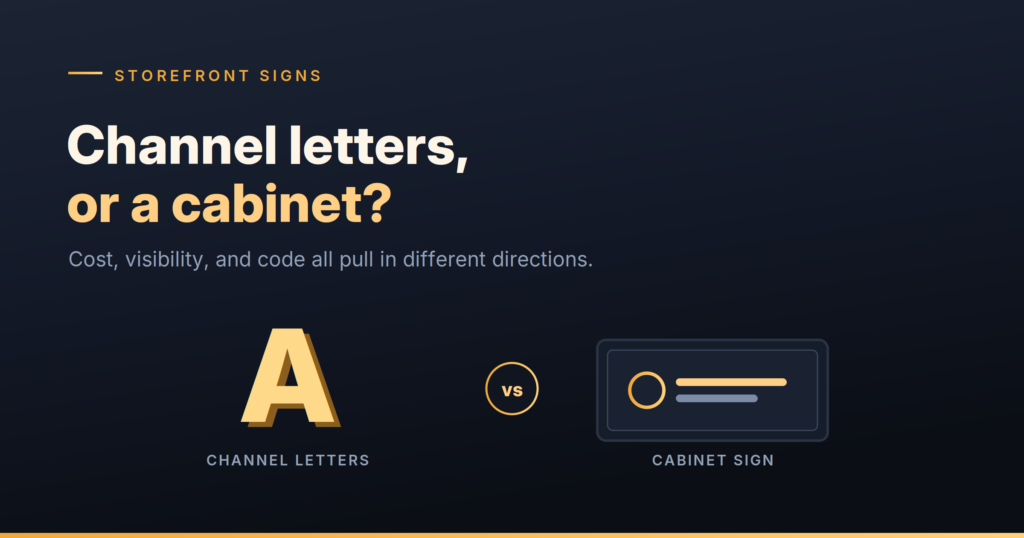
When choosing between channel letters and cabinet signs, one must come from two directions. The first direction is what each sign type physically is, because the two are built in fundamentally different ways. The second direction is what each one does for your storefront- the visibility, the branding, and the budget. Work through both directions and the right answer usually reveals itself.
What Channel Letters Are
Channel letters are individually fabricated, three-dimensional letters, each one a self-contained unit with aluminum sides (called returns), an acrylic face, and LED modules inside. They mount directly to the building facade or to a rectangular raceway that conceals the wiring. They also come in three main varieties: front-lit letters that glow through the face, reverse or halo-lit letters that cast a soft ring of light against the wall behind them, and open-face letters that expose the lighting for a retro effect. According to the International Sign Association, individual letter signs of this kind are among the most common commercial signs in the country, and one drive down Manchester Road confirms it.
What Cabinet Signs Are
A cabinet sign, sometimes called a box sign, takes the opposite approach. Rather than building each letter separately, the entire message lives on one or two large translucent faces mounted in a single internally illuminated aluminum enclosure. The face is typically acrylic or polycarbonate printed with your complete design, which means logos, gradients, and photographs reproduce exactly as your brand guidelines intend.
The Case for Channel Letters
Channel letters have earned their popularity for three reasons. They project a premium, dimensional presence that flat signage cannot match. They deliver excellent visibility day and night, with each letter glowing independently. And they satisfy landlords- often times the sign criteria written into shopping center leases require channel letters outright, taking the decision out of your hands before it begins. They are also durable, with quality LED components running for years before service is needed.
The Case for Cabinet Signs
The cabinet sign answers with three strengths of its own. The first is budget, as cabinets typically cost 20 to 40 percent less than comparable channel letters. The second is design freedom, because a complex, multi-color logo that would be expensive to fabricate as individual letters simply prints onto a cabinet face. Lastly, cabinets are the easiest signs to update, since a rebrand or ownership change requires only a new face rather than a new sign. Cabinet-style panels are also the standard format for tenant listings on shared pylon signs and monument structures.
Where Each One Falls Short
Honesty requires the reverse angle as well. Channel letters cost more, and the cost climbs quickly with script fonts, logos, and larger sizes, since every curve must be individually fabricated. Cabinet signs carry a different risk: some municipalities and historic districts restrict or even prohibit internally illuminated box signs, and a plain rectangular cabinet can read as generic if the face design is weak. In either case, the local sign code has a vote, which is one more reason permitting research belongs at the front of the project rather than the end. Our guide to signage permits explains why.
What They Cost Side by Side
In the current St. Louis market, a typical illuminated channel letter set for a single storefront lands between $4,000 and $8,000 installed, while a comparable cabinet sign generally comes in meaningfully lower. We break down the broader cost drivers in our post on what to expect from custom sign costs, but the honest summary is that cabinets win on price and channel letters win on presence.
Three Questions That Settle the Debate
The first question is what your lease allows, because landlord sign criteria override personal preference. The second question is what your municipality allows, because size, illumination, and sign type are all regulated locally, as we explained in our overview of local signage laws. The third question is what your brand requires: a clean wordmark favors channel letters, while an intricate full-color logo favors a cabinet. Answer those three and the debate typically settles itself.
Let Piros Signs Build Either One, Correctly
Piros Signs designs and fabricates both sign types in-house in our UL-listed shop, and our design team is happy to weigh the options against your building, your budget, and your brand. Explore the full range on our types of signs page, look through our past projects, and when you are ready, request a quote or call (636) 464-0200, putting the right sign on your storefront the first time.